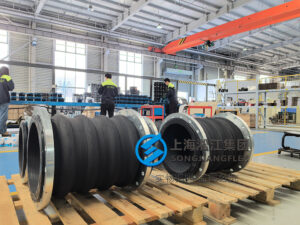
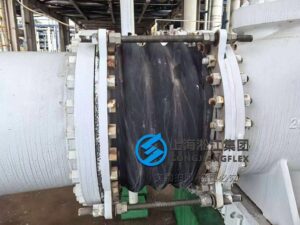
Why Is the K16S Oil-Resistant SAE Rubber Compensator the Best Choice for Industrial Pipeline Systems?
Industrial pipelines fail under oil exposure, vibration, and pressure stress, causing leaks and downtime. The K16S oil-resistant compensator solves these critical operational problems effectively.
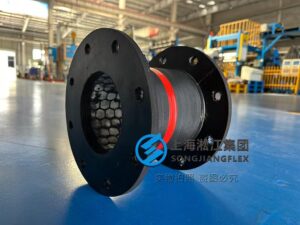
The K16S Oil-Resistant SAE Rubber Compensator is designed for industrial pipelines requiring high resistance to oil, vibration absorption, and thermal movement compensation. Built to SAE standards, it improves pipeline stability, reduces mechanical stress, prevents leakage, and extends equipment service life in oil & gas, HVAC, pump, and industrial systems.
Understanding its structure and performance helps explain why it is widely used in demanding industries.
What Makes the K16S Oil-Resistant Rubber Compensator Highly Reliable?
The K16S is manufactured using a specially engineered oil-resistant rubber compound designed for continuous industrial operation.
This material is developed according to SAE performance standards to ensure stability when exposed to petroleum-based fluids, lubricants, and chemical media. It maintains elasticity, sealing performance, and structural integrity even under long-term operation in aggressive environments.
Compared to standard rubber expansion joints, the K16S offers improved resistance to swelling, cracking, and aging. This makes it highly suitable for pipelines where oil contact is constant and operational safety is critical.
How Does the K16S Reduce Pipeline Vibration and Mechanical Stress?
Pipeline vibration is commonly generated by pumps, compressors, and fluid flow fluctuations in industrial systems.
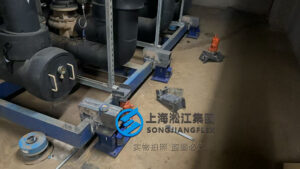
The K16S compensator effectively absorbs vibration energy and reduces stress transmission across the pipeline network. It protects flanges, valves, and connected equipment from fatigue damage and misalignment.
By isolating vibration at the connection point, it significantly reduces system noise and mechanical wear. This improves overall system stability and ensures safer long-term operation in continuous-duty environments.
Where Is the K16S Oil-Resistant Compensator Commonly Used?
The K16S is suitable for a wide range of industrial applications requiring flexibility, durability, and oil resistance.
Typical applications include oil and gas pipelines, HVAC systems, pump stations, power plants, petrochemical facilities, and industrial processing lines. Its performance under pressure and oil exposure makes it ideal for complex engineering systems.
In oil refineries, it ensures safe fluid transport under harsh chemical conditions. In HVAC systems, it reduces vibration and structural noise. In pump systems, it absorbs hydraulic shock and protects downstream equipment from damage.
Why Is SAE Standard Important for Rubber Compensators?
SAE standards define strict requirements for dimensional accuracy, material performance, and pressure resistance in industrial components.
The K16S is designed in compliance with SAE standards, ensuring consistent quality, predictable performance, and compatibility with international pipeline systems. This reduces installation risks and improves engineering reliability across different projects.
Standardized design also simplifies procurement and system integration, making it easier for engineers and contractors to achieve safe and efficient pipeline configurations in global industrial applications.
How Does the K16S Extend Equipment Life and Reduce Maintenance Cost?
Industrial equipment failure is often caused by continuous vibration, pressure fluctuations, and chemical exposure over time.
The K16S compensator reduces these stresses by isolating vibration and absorbing pipeline movement. This protects pumps, pipelines, and connected machinery from fatigue damage.
As a result, it significantly reduces maintenance frequency, lowers unplanned downtime, and extends equipment service life. This leads to improved operational efficiency and reduced total lifecycle cost for industrial systems.
Summary
The K16S Oil-Resistant SAE Rubber Compensator provides reliable vibration control, oil resistance, and long-term durability, making it ideal for demanding industrial pipeline applications worldwide.