How Base Frame Design Affects Vibration Isolation Performance?
When talking about vibration isolation, we usually start with the isolator.
What type of spring should be used?
What is the load on each isolator?
What is the required deflection?
Should we use a spring isolator or a rubber isolator?
These are important questions.
But in actual projects, we often find that the isolator is not the only thing that determines the final result.
The base frame matters too.
A good vibration isolator installed on a poorly designed base frame may not give the expected result. The frame can bend, the loads can become uneven, and vibration can be transferred through other parts of the system.
This is especially important for pumps, compressors, fans, chillers, generators, and other rotating equipment.
The Base Frame Is Part of the Isolation System
A simple way to look at the vibration path is:
Equipment → Base Frame → Vibration Isolators → Supporting Structure
The isolators are installed between the equipment and the supporting structure to reduce vibration transmission.
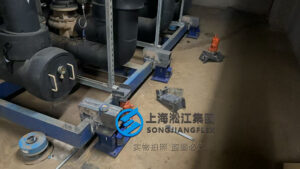
But the equipment normally does not sit directly on the isolators. It is often mounted on a steel base frame or inertia base.
If the frame is not stiff enough, it can deform when the equipment is running.
Then the isolators may not carry the load as expected.
This is one reason why vibration problems sometimes remain even after new isolators have been installed.
Load Distribution Is More Important Than It Looks
Let’s take a simple example.
Suppose a machine weighs 1,000 kg and is installed on four vibration isolators.
At first glance:
1,000 ÷ 4 = 250 kg per isolator
It seems simple.
But this does not necessarily mean that every isolator will actually carry 250 kg.
The motor may be located on one side of the machine. The center of gravity may not be in the middle. There may also be pumps, accessories, piping, or other components attached to the equipment.
The base frame itself can also affect how the load is distributed.
So when selecting vibration isolators, we prefer to look at the actual load at each mounting point, rather than only looking at the total equipment weight.
What Happens If the Base Frame Is Too Flexible?
A flexible frame may bend or twist when the equipment is operating.
Depending on the equipment and frame design, this can cause several problems:
- Different isolators carry different loads
- Some isolators may be overloaded
- Equipment movement may become excessive
- The actual isolation performance may differ from the calculation
- Additional vibration may be introduced into the structure
- Connections between the equipment and frame may experience additional stress
In other words, the isolator may be correctly selected, but the overall system still does not work as expected.
Don’t Forget the Center of Gravity
The center of gravity is another detail that should not be ignored.
For example, a large motor mounted on one side of a pump or fan can create an uneven load distribution.
The same situation can occur with compressors, generators and packaged HVAC equipment.
When the center of gravity is far from the center of the isolator arrangement, some isolators may carry much more load than others.
This is why we normally need information about the equipment layout and mounting points before recommending the isolators.
Spring Isolators Need a Stable Base
Spring vibration isolators are commonly used for HVAC equipment and industrial machinery.
They can provide good isolation performance when the load and operating conditions are correctly considered.
But the supporting base still needs to be stable.
Depending on the application, this may be a welded steel base frame, an inertia base, or another suitable structural arrangement.
For equipment with significant dynamic forces, an inertia base can sometimes be useful because the additional mass can improve stability.
For equipment exposed to wind or seismic forces, restrained spring isolators may also need to be considered.
There is no single solution for every application.
Piping Can Create Another Vibration Path
There is another issue we often see in equipment installations: piping.
Imagine that the equipment is installed on vibration isolators, but the connected pipe is rigidly fixed to the building structure.
The equipment can still transfer vibration through the pipe.
In this case, the vibration isolator may be doing its job, but the overall system still has another path for vibration transmission.
Flexible connectors can be useful in suitable applications, but they should not be used to support the weight of the pipe.
The pipe should have its own proper support.
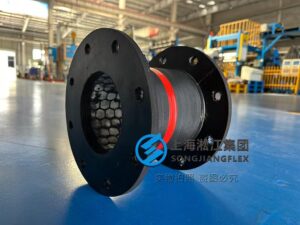
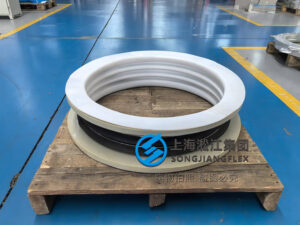
This is particularly important when using rubber expansion joints.
A Few Questions We Usually Ask Before Selecting an Isolator
For a new project, equipment weight is only the starting point.
We normally want to know:
- What is the equipment weight?
- What is the operating speed?
- How many mounting points are there?
- What is the load at each mounting point?
- Where is the center of gravity?
- What are the mounting dimensions?
- Is the equipment installed indoors or outdoors?
- Are there wind or seismic requirements?
- Are there connected pipes?
- What type of foundation or supporting structure is being used?
The answers to these questions can make a big difference to the final selection.
Think About the Whole System
One thing we have learned from vibration isolation projects is that it is better to look at the complete system rather than focus only on the isolator.
Equipment → Base Frame → Isolators → Foundation → Piping
Each part can affect the others.
A spring isolator may have the correct load capacity, but if the base frame is too flexible, the result may still be unsatisfactory.
A rubber expansion joint may have the correct size, but if the pipe is not properly supported, the joint may be overloaded.
Good vibration control is therefore not simply about choosing a product from a catalogue.
It starts with understanding the actual working conditions.
Final Thoughts
When designing a vibration isolation system, don’t look at the isolator alone.
Take a look at the base frame, load distribution, center of gravity, foundation, and connected piping as well.
These details may seem small during the design stage, but they can make a significant difference once the equipment starts running.
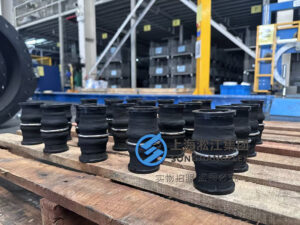
At Shanghai Songjiang Vibration Absorber Co., Ltd., we manufacture spring vibration isolators, rubber vibration isolators, air spring isolators, and rubber expansion joints for HVAC, construction, marine, and industrial applications.
If you are working on a vibration isolation project, you can send us the equipment weight, operating speed, mounting dimensions, and installation drawing. These details help us understand the application and recommend a suitable solution.