What Is a WCR Elbow Rubber Expansion Joint and Why Is It Used in Piping Systems?
Piping systems often suffer from vibration, thermal expansion, and installation stress, especially at pipe bends. Without proper flexibility, these forces can damage pipelines and equipment. A WCR elbow rubber expansion joint offers an effective solution.
A WCR elbow rubber expansion joint is a 90-degree flexible pipe connector designed to absorb vibration, compensate for pipeline displacement, and reduce noise. It is widely used in pump systems, HVAC pipelines, and industrial piping systems to protect equipment and improve system stability.
Understanding its structure, benefits, and applications helps engineers choose the right vibration control solution.
What Is a WCR Elbow Rubber Expansion Joint?
A WCR elbow rubber expansion joint is a specially designed 90 degree rubber expansion joint used in piping systems where directional changes and vibration control are required simultaneously. It combines flexibility and structural strength in a compact design.
A WCR elbow rubber expansion joint is a flexible rubber connector shaped at a 90-degree angle, designed to connect pipelines while absorbing vibration, reducing noise, and compensating for pipeline movement in industrial piping systems.
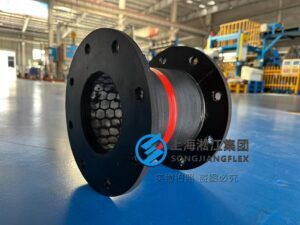
Unlike standard straight rubber expansion joints, the elbow design allows the connector to be installed directly at pipe turns. The joint usually consists of a reinforced rubber body, fabric layers, steel wire reinforcement, and metal flanges. This structure allows the expansion joint to withstand pressure while maintaining flexibility. In many installations, especially in pump vibration isolation systems, the WCR elbow rubber expansion joint helps protect pipelines, valves, and equipment from mechanical stress and vibration damage.
Why Are Elbow Rubber Expansion Joints Used in Piping Systems?
Pipe bends are common points where vibration, thermal expansion, and mechanical stress accumulate. Without flexible connectors, these stresses can shorten the lifespan of pipes and connected machinery.
Elbow rubber expansion joints are used to absorb vibration, reduce stress concentration at pipe bends, and compensate for thermal expansion or installation misalignment in industrial piping systems.
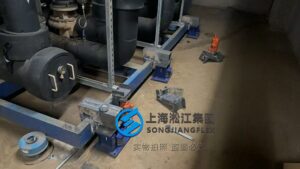
In many industrial facilities such as water supply systems, HVAC pipelines, and pump installations, equipment generates constant vibration. When rigid pipes are connected directly, this vibration can transfer throughout the system. A flexible pipe connector like the WCR elbow rubber expansion joint isolates vibration and prevents damage. Additionally, it compensates for small installation errors and thermal expansion, ensuring smooth and reliable operation of the entire pipeline network.
What Are the Key Advantages of WCR Elbow Rubber Expansion Joints?
WCR elbow rubber expansion joints provide multiple benefits beyond simple pipeline connection. Their flexible rubber design helps improve the reliability and service life of mechanical equipment and piping systems.
The main advantages of WCR elbow rubber expansion joints include vibration isolation, noise reduction, displacement compensation, space-saving installation, and protection for pumps, valves, and industrial equipment.
One of the biggest advantages is vibration isolation. Pumps, compressors, and generator sets often create mechanical vibrations that can damage pipelines over time. Rubber expansion joints absorb these vibrations effectively. They also reduce operational noise, which is particularly important in HVAC systems and industrial environments. Another advantage is space efficiency. Because the connector already has a 90-degree shape, it eliminates the need for additional pipe elbows, simplifying installation. This design also helps reduce pipeline stress and improves the durability of the entire system.
Where Are WCR Elbow Rubber Expansion Joints Commonly Used?
WCR elbow rubber expansion joints are widely used across various industries where pipelines must handle vibration, pressure, and thermal movement.
These flexible connectors are commonly used in pump systems, HVAC pipelines, water supply networks, generator sets, chemical plants, and industrial machinery requiring vibration isolation.
Typical applications include water pump systems, where vibration from the pump must be isolated from the pipeline network. They are also frequently used in HVAC systems to reduce noise and vibration in air conditioning pipelines. In power plants and generator installations, the joints help protect pipes from continuous mechanical movement. Additionally, industries such as petrochemical processing, water treatment, and manufacturing plants rely on rubber expansion joints to maintain system stability and reduce maintenance costs.
How to Choose the Right Elbow Rubber Expansion Joint?
Selecting the right rubber expansion joint is critical for ensuring safe and efficient pipeline operation. Engineers and procurement managers must evaluate several technical parameters before purchasing.
When selecting an elbow rubber expansion joint, key factors include pipe diameter, pressure rating, temperature range, rubber material, flange standards, and displacement requirements.
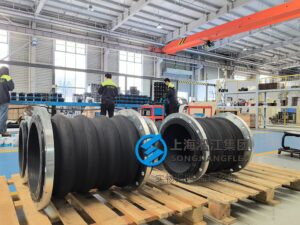
For example, EPDM rubber is commonly used for water and HVAC systems because of its excellent resistance to heat and weathering. NBR rubber is suitable for oil-related applications. Buyers should also confirm flange standards such as ANSI, DIN, or JIS to ensure compatibility with existing pipelines. Reliable manufacturers like Songjiangflex provide customized solutions based on project requirements. With automated production lines, strict quality control, and advanced testing equipment, manufacturers can ensure stable product performance and fast delivery for urgent projects.
What Is the Difference Between Elbow and Straight Rubber Expansion Joints?
Many buyers wonder whether they should choose a straight rubber expansion joint or an elbow design. The choice depends mainly on pipeline layout and installation conditions.
Straight rubber expansion joints connect pipelines in a straight line, while elbow rubber expansion joints integrate a 90-degree bend, allowing flexible vibration isolation and displacement compensation at pipe turns.
Straight rubber expansion joints are typically installed between pumps and pipelines to absorb vibration along a linear direction. In contrast, elbow rubber expansion joints are ideal for installations where pipes change direction. By integrating the elbow and flexible connector into a single component, the WCR design reduces the number of pipe fittings and simplifies installation. This makes it especially useful in compact mechanical rooms or equipment installations where space is limited.
Summary
WCR elbow rubber expansion joints provide effective vibration isolation, displacement compensation, and pipeline protection, making them essential flexible connectors for modern industrial piping systems.