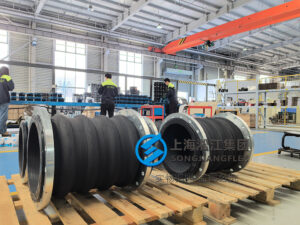
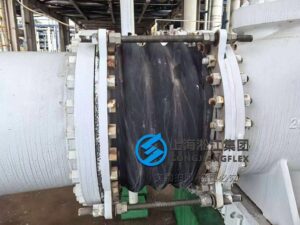
Why Should You Choose a DN150 PN63 High-Pressure Rubber Compensator for Industrial Pipelines?
High-pressure pipelines often face vibration, misalignment, and leakage risks. DN150 PN63 rubber compensators ensure safety, durability, and reduced maintenance costs.
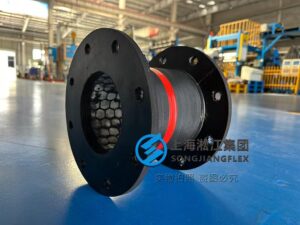
The DN150 PN63 high-pressure rubber compensator, hand-wrapped with EPDM and reinforced with control rods, absorbs vibration, compensates misalignment, resists chemicals and abrasion, and ensures long-lasting pipeline safety across mining, water treatment, and industrial applications.
Let’s explore its features, installation, maintenance, certifications, and industrial applications in detail.
1️⃣ What Are the Main Features of DN150 PN63 Rubber Compensator?
DN150 PN63 rubber compensator feature hand-wrapped EPDM, control rod reinforcement, and a robust high-pressure design, providing reliable vibration absorption and misalignment compensation.
These compensators deliver chemical and abrasion resistance, reduce vibration and noise, and prevent leakage. They are ideal for industrial pipelines, mining, and water treatment systems.
EPDM hand-wrapping enhances durability by ensuring leak-proof sealing and flexibility. Reinforced control rods limit axial movement under high pressure. The compensator can handle pressures up to PN63, resist abrasive slurries, and chemical fluids, making it suitable for mining, chemical, power generation, and water treatment pipelines.
2️⃣ How Does the DN150 PN63 Rubber Compensator Improve Pipeline Safety and Reliability?
High-pressure pipelines risk leakage, vibration damage, and misalignment. DN150 PN63 Rubbercompensators effectively mitigate these risks and enhance operational safety.
By absorbing shocks, compensating misalignment, and resisting chemical damage, these joints reduce mechanical stress, prevent leaks, and extend pipeline lifespan.
Vibration and noise reduction protect pumps, fans, valves, and sensitive equipment. Misalignment compensation allows for thermal expansion and minor installation errors. Compared to metal expansion joints, rubber compensators offer better flexibility, less noise, and easier installation, improving reliability in extreme industrial conditions.
3️⃣ How Do You Install and Maintain a DN150 PN63 Rubber Compensator?
Correct installation and regular inspection are key to maximizing performance and lifespan in high-pressure systems.
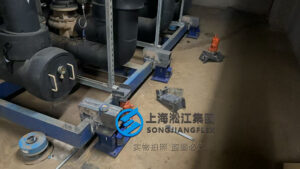
Align the compensator with pipeline flanges, check control rods, and inspect periodically for wear, chemical damage, or EPDM degradation to ensure safety and longevity.
Installation requires even bolt tightening, avoiding overextension, and confirming misalignment tolerance. Maintenance intervals depend on fluid type, operating pressure, and temperature. Regular inspections prevent leaks and prolong service life, especially in mining, chemical, and water treatment pipelines.
4️⃣ Can This Compensator Handle Chemical or Abrasive Fluids?
Industrial pipelines often carry aggressive chemicals or abrasive materials. DN150 PN63 compensators are engineered to withstand such challenges.
EPDM rubber and reinforced control rods provide chemical resistance and abrasion tolerance, ensuring safety in harsh industrial environments.
The compensator resists acids, alkalis, and slurry abrasion while maintaining integrity. Custom options allow adaptation for specific fluids, high-pressure systems, and mining or chemical plant pipelines. This makes it ideal for heavy-duty applications requiring long-lasting protection.
5️⃣ Which Industries Commonly Use High-Pressure Rubber Compensators?
DN150 PN63 compensators are widely adopted across industries requiring high-pressure and vibration-resistant pipelines.
Mining, chemical processing, water treatment, power generation, and industrial manufacturing benefit from their vibration absorption, misalignment compensation, and leak prevention.
In mining pipelines, they handle slurry transport under high pressure. Chemical plants rely on them for corrosive liquids. Water treatment and power generation pipelines use them to reduce vibration and noise, protect pumps and fans, and extend equipment lifespan.
6️⃣ What Makes Songjiangflex’s Rubber Compensators More Reliable?
Songjiangflex combines advanced production, rigorous testing, and customization to ensure superior compensator performance.
Automated production lines, EPDM hand-wrapped joints, reinforced control rods, and comprehensive quality control guarantee reliability, durability, and suitability for extreme applications.
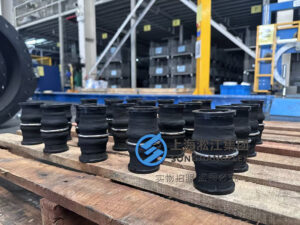
Our factory testing includes hydrostatic, burst, fatigue, chemical, abrasion, and vibration tests. Custom sizes, pressure ratings, and material options meet diverse industrial needs. Exported to Europe, North America, Middle East, and Asia, Songjiangflex ensures timely delivery and long-term reliability.
7️⃣ What Certifications and Quality Standards Do They Meet?
Quality assurance is critical for high-pressure pipeline safety and industrial compliance.
Songjiangflex rubber compensators meet ISO standards and are tested for pressure, chemical resistance, and durability, ensuring compliance with global industrial requirements.
Certificates like ISO 9001 and CE confirm consistent quality and safe operation. This provides confidence to buyers in mining, chemical, and water treatment industries and aligns with global procurement standards.
8️⃣ Can This Compensator Be Customized for Special Industrial Applications?
Different industrial pipelines have unique pressure, chemical, and space requirements.
DN150 PN63 compensators can be customized in size, pressure rating, and materials to meet specific industrial conditions and fluids.
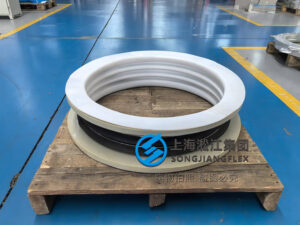
Songjiangflex offers tailored solutions for extreme pressure, chemical exposure, mining slurry, or water treatment pipelines. Custom options include control rod length, EPDM composition, and flange design to ensure perfect fit, optimal vibration absorption, and long service life.
Summary
DN150 PN63 rubber compensators provide vibration absorption, chemical resistance, misalignment compensation, and customizable options, ensuring safe, reliable, and long-lasting industrial pipelines.