Why Is a Double Sphere Rubber Expansion Joint the Best Choice for Enhanced Compensation and Vibration Isolation?
Pipeline vibration and misalignment often lead to leakage and equipment failure. This causes costly downtime and safety risks. A double sphere rubber expansion joint effectively eliminates these problems.
A double sphere rubber expansion joint provides superior flexibility for axial, lateral, and angular movement while significantly reducing vibration and noise in pipeline systems. Its dual-bulb structure improves stress distribution, making it ideal for HVAC, water supply, and industrial piping systems requiring long-term stability and reliability.
To understand its advantages, it is important to explore how it is designed and why it performs better than traditional solutions.
What Is a Double Sphere Rubber Expansion Joint?
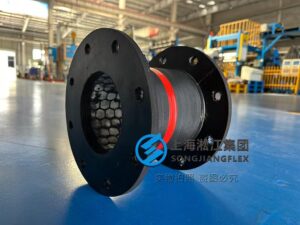
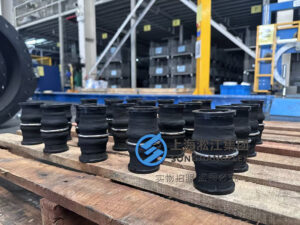
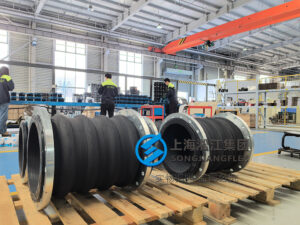
A double sphere rubber expansion joint is a flexible pipeline connector designed with two spherical rubber sections connected in series. This structure enhances flexibility and movement absorption compared to single sphere designs, making it highly effective in modern industrial piping systems.
It is typically constructed with high-strength rubber such as EPDM or NBR, reinforced fabric layers, and metal flanges. The dual-sphere configuration increases deformation capacity and reduces stress concentration. It is widely used in systems where vibration isolation, pressure compensation, and thermal expansion control are required.
The double sphere structure creates two independent flexible zones that distribute stress more evenly along the joint body. This reduces localized strain and significantly improves fatigue resistance. In industrial systems such as HVAC pipelines, pump stations, and water treatment facilities, this design ensures stable operation even under continuous vibration and pressure fluctuations. Manufacturers like Songjiangflex optimize these joints using different rubber compounds to match chemical, thermal, and mechanical requirements, ensuring long service life across diverse applications.
How Does It Improve Compensation Ability?
Industrial pipelines constantly experience movement caused by pressure changes, thermal expansion, and equipment vibration. A double sphere expansion joint significantly improves the system’s ability to absorb these forces.
The dual-sphere structure increases allowable axial, lateral, and angular movement. This reduces stress on pipes and flanges, preventing deformation and leakage. It ensures stable operation in dynamic piping systems.
Unlike rigid connections, this flexible connector allows multi-directional movement without transferring stress to surrounding components. The two spherical sections work together to distribute mechanical load more efficiently. This reduces pipe fatigue and prevents cracking at connection points. In long pipeline networks, especially in chemical plants and municipal water systems, this improved compensation capability is essential for maintaining structural integrity and reducing maintenance frequency.
Why Does It Provide Better Vibration Isolation?
Vibration from pumps, compressors, and fluid flow can cause severe mechanical wear and system instability over time.
The rubber material and dual-bulb design absorb and dampen vibration energy, reducing noise and protecting connected equipment from continuous mechanical stress.
The elasticity of the rubber structure allows it to convert mechanical vibration into heat energy, effectively reducing transmission across the pipeline system. The dual chambers enhance damping efficiency by creating staged absorption zones. This is especially important in HVAC systems, pump stations, and industrial machinery where continuous vibration can damage seals, bearings, and flanges. By isolating vibration at the source, system reliability and equipment lifespan are significantly improved.
What Problems Occur Without a Double Sphere Expansion Joint?
Many pipeline failures occur not due to poor design, but due to the absence of proper flexibility components in the system.
Without a flexible expansion joint, pipelines experience vibration transfer, thermal stress buildup, flange damage, and leakage, leading to frequent maintenance and system failure.
Rigid piping systems cannot absorb movement caused by temperature changes or pump operation. Over time, stress accumulates at weak points such as joints and bends, leading to cracks and leakage. In HVAC and industrial water systems, this can result in unexpected downtime and costly repairs. A properly designed double sphere rubber expansion joint prevents these issues by acting as a mechanical buffer between equipment and pipelines.
What Materials Are Best for Different Working Conditions?
Selecting the correct material is critical for ensuring durability and safe operation under different media and temperature conditions.
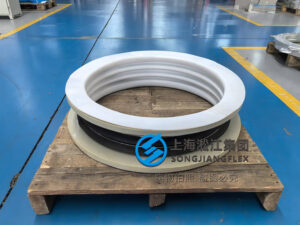
EPDM is suitable for water and HVAC systems, NBR is ideal for oil-based media, and PTFE-lined expansion joints are recommended for highly corrosive or high-temperature environments.
Material selection directly affects chemical resistance, temperature tolerance, and service life. EPDM rubber offers excellent elasticity and aging resistance in water-based systems. NBR performs well in petroleum and hydrocarbon applications. For aggressive chemical environments such as acids and solvents, PTFE lining provides superior corrosion resistance. Choosing the right material ensures compatibility with system conditions and prevents premature failure in industrial piping networks.
How Does It Improve Pump and Equipment Lifespan?
Pumps and compressors generate continuous vibration that can significantly reduce equipment lifespan if not properly controlled.
A double sphere rubber expansion joint isolates vibration from pumps and compressors, reducing mechanical stress on connected equipment and extending operational life.
When pumps operate, they produce vibration and pressure pulsation that travel through pipelines. Without isolation, this energy reaches bearings, seals, and structural components, accelerating wear and failure. The double sphere design acts as a buffer zone, absorbing these forces before they reach sensitive equipment. This results in lower maintenance costs, improved operational stability, and longer service life for industrial machinery.
What Standards Should Be Considered in Selection?
Industrial piping systems require strict adherence to international standards to ensure compatibility, safety, and performance reliability.
Common flange standards include ANSI, DIN, and JIS. Pressure ratings, testing certifications, and material compliance must also be considered when selecting an expansion joint.
Different regions use different flange standards, and correct matching is essential for safe installation. ANSI is widely used in North America, DIN in Europe, and JIS in Asia. In addition, hydrostatic testing, fatigue testing, and pressure certification ensure product reliability under real operating conditions. High-quality manufacturers like Songjiangflex ensure compliance with international standards, providing safe and reliable solutions for global industrial applications.
Installation and Maintenance Tips
Proper installation and routine maintenance are essential to maximize the performance and service life of expansion joints.
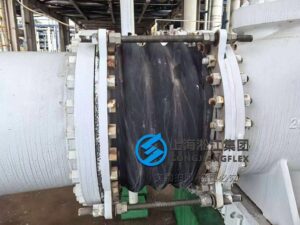
Correct alignment, avoiding over-compression, and proper bolt tightening are essential during installation. Regular inspection helps detect wear and prevent system failure.
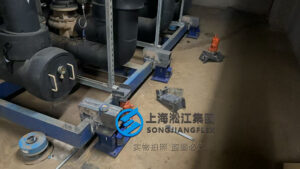
During installation, the joint should not be twisted or overstretched beyond design limits. Supporting structures must be properly installed to avoid excessive load on the joint body. Regular inspections should focus on rubber condition, flange tightness, and signs of leakage or deformation. In high-demand industrial environments, scheduled replacement is recommended to maintain system safety and efficiency.
Summary
A double sphere rubber expansion joint provides superior vibration isolation and movement compensation, ensuring safer, more reliable, and longer-lasting pipeline performance across industries.