Why Do Vacuum Rubber Expansion Joints with Internal Metal Support Rings Prevent Collapse in Negative Pressure Pipelines?
Vacuum pipelines often face joint collapse, leakage, and deformation. This creates serious system failure risks in suction lines and negative pressure environments.
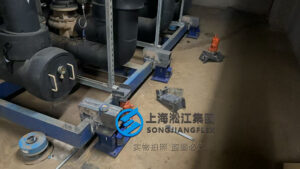
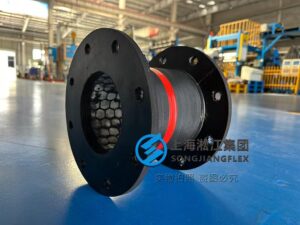
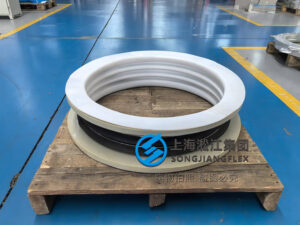
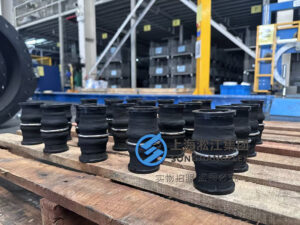
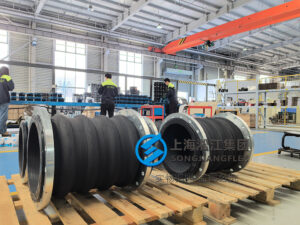
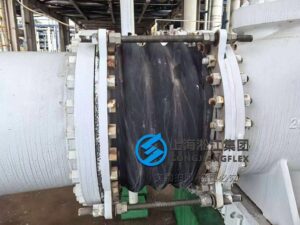
A vacuum rubber expansion joint with an internal metal support ring is designed to resist external atmospheric pressure in negative pressure systems. The reinforced structure prevents suction-induced collapse, maintains circular geometry, and ensures sealing stability. As a vacuum pipeline flexible connector, it delivers vibration isolation, pressure compensation, and long-term reliability in industrial vacuum applications.
To understand its performance, we must first examine why vacuum conditions damage standard rubber bellows.
Why Do Rubber Expansion Joints Collapse Under Vacuum Conditions?
In negative pressure pipelines, external atmospheric pressure is higher than internal pressure, forcing continuous inward suction on the rubber structure.
This pressure imbalance causes standard rubber expansion joints to deform inward. Without structural reinforcement, the bellows lose shape, restrict flow, and may completely collapse. This is a common failure mode in anti-suction rubber expansion bellows used in suction lines and vacuum pipelines.
When a pipeline operates under vacuum conditions, the system no longer pushes outward pressure against the joint. Instead, external air pressure compresses the rubber body. Since rubber materials alone have limited compressive rigidity, the wave structure becomes unstable. Over time, repeated suction cycles accelerate fatigue, leading to permanent flattening and system failure.
What Causes Rubber Bellows to Flatten in Negative Pressure Pipelines?
Flattening occurs when the structural resistance of the bellows is weaker than the continuous external vacuum force applied during operation.
In negative pressure expansion joints, the bellows wall cannot maintain its geometry under sustained atmospheric compression. This results in progressive flattening, flow restriction, and reduced sealing performance. The absence of internal reinforcement is the main reason for this deformation in vacuum rubber expansion joint systems.
Flat deformation is not an immediate failure but a gradual process. Each vacuum cycle slightly reduces elasticity and structural recovery. In industrial systems such as pump suction or chemical vacuum lines, this leads to unpredictable performance drops. Once flattened, the joint can no longer absorb vibration or compensate displacement effectively.
Can Standard Expansion Joints Be Used in Vacuum Systems?
Standard expansion joints are not designed for sustained vacuum conditions and often fail when exposed to continuous negative pressure.
Conventional rubber expansion joints are engineered for positive pressure or neutral environments. In vacuum systems, they lack internal support, making them unsuitable as vacuum pipeline flexible connectors. Using standard designs in suction lines significantly increases the risk of collapse and leakage.
Although standard joints may initially operate under light vacuum, performance quickly degrades under long-term operation. Engineers often underestimate the impact of external atmospheric pressure. Without reinforcement, the rubber structure cannot maintain stability, making it unsuitable for industrial vacuum rubber expansion joint applications where safety and uptime are critical.
How Does a Metal Reinforcement Ring Improve Vacuum Resistance?
The internal metal support ring acts as a structural backbone that resists inward suction forces in vacuum systems.
A rubber expansion joint with metal support ring maintains its circular geometry under external pressure. The reinforcement distributes stress evenly, preventing localized collapse. This design significantly improves vacuum resistance and ensures stable operation in internal metal support ring expansion joint systems.
Typically made from stainless steel or corrosion-resistant alloys, the reinforcement ring is embedded within the rubber layers during vulcanization. This integration forms a composite structure that combines flexibility with rigidity. As a result, the joint retains vibration damping ability while resisting deformation in high-demand vacuum environments.
What Is the Structure of a Vacuum-Resistant Rubber Expansion Joint?
A vacuum-resistant design integrates multiple reinforcement layers to ensure stability under both mechanical and pressure stress conditions.
A vacuum resistant rubber joint typically consists of an outer rubber layer, internal fabric reinforcement, and a stainless steel reinforced expansion joint structure. The internal metal ring provides anti-collapse support, while the elastomer ensures sealing and vibration absorption.
Each layer serves a specific function. The outer rubber provides chemical and environmental resistance. The reinforcement fabric improves tensile strength. The internal metal support ring prevents structural collapse. Together, these components form a durable anti-collapse rubber expansion joint suitable for continuous industrial vacuum operation.
Why Is Internal Support Necessary for Rubber Bellows in Suction Lines?
Internal support is essential because suction lines continuously expose bellows to external compressive forces.
Without internal reinforcement, rubber bellows deform under suction pressure. Internal metal support ensures shape retention, stability, and long-term performance in anti-suction rubber expansion bellows used in vacuum pipelines.
Suction systems are particularly demanding because pressure is constantly negative. This means the joint is always being compressed rather than expanded. Internal support transforms the structure from a flexible-only component into a hybrid rigid-flexible system, significantly improving operational safety and reducing maintenance frequency.
What Is the Difference Between Standard and Vacuum Reinforced Expansion Joints?
The key difference lies in structural reinforcement and the ability to withstand external atmospheric pressure.
Standard expansion joints lack internal support and are unsuitable for vacuum conditions. In contrast, vacuum reinforced designs include a rubber expansion joint with metal support ring, enabling stable operation in negative pressure expansion joint applications.
Standard joints focus on flexibility and cost efficiency, while reinforced versions prioritize structural integrity and safety. Vacuum reinforced models maintain flow capacity, prevent collapse, and extend service life. This makes them essential in industrial vacuum systems where downtime or failure is costly.
Are Metal-Reinforced Rubber Joints Better for Negative Pressure Systems?
Yes, metal-reinforced designs significantly outperform standard joints in vacuum and suction environments.
Metal-reinforced expansion joints provide superior resistance to deformation and collapse. They ensure reliable operation in vacuum rubber expansion joint systems by maintaining geometry and sealing integrity under continuous external pressure.
In demanding industrial applications such as chemical processing and pump suction systems, reinforced joints reduce operational risk. Their structural stability minimizes maintenance needs and prevents unexpected shutdowns. As a result, they are widely preferred in modern vacuum pipeline flexible connector installations.
Which Type of Expansion Joint Is Suitable for Vacuum Pipelines?
Only reinforced vacuum-resistant designs with internal support structures are suitable for continuous vacuum pipeline operation.
The ideal solution is a stainless steel reinforced expansion joint designed specifically for negative pressure systems. These vacuum pipeline flexible connectors maintain structural integrity, absorb vibration, and prevent collapse under suction conditions.
Selection should consider vacuum level, temperature, chemical exposure, and mechanical stress. High-quality vacuum rubber expansion joints from professional manufacturers like Songjiangflex are engineered for customized industrial requirements. This ensures compatibility with complex systems and long-term operational reliability.
Summary
Vacuum rubber expansion joints with internal metal support rings prevent collapse, ensure sealing stability, and deliver reliable performance in negative pressure and suction pipeline systems.