Why Are WCR Type DN200 Spiral Wound Rubber Expansion Joints Widely Used in Marine Applications?
Marine pipelines are constantly exposed to vibration, movement, and seawater, which can cause leaks or failures if rigid connections are used.
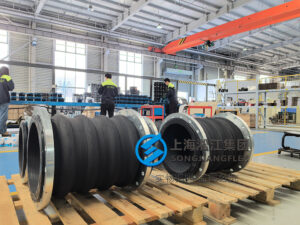
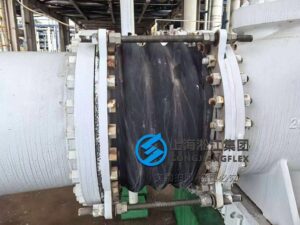
The WCR type DN200 spiral wound rubber expansion joint is designed specifically for marine pipelines. It provides vibration damping, absorbs axial and lateral movement, and resists seawater corrosion, ensuring reliable performance in shipboard piping systems like HVAC, cooling water, and fuel lines.
Let’s take a closer look at why these joints are so effective in marine engineering.
What is a WCR type spiral wound rubber expansion joint and how does it work in marine pipelines?
Marine pipelines need flexibility to handle vibrations, movement of the ship, and pressure changes during operation.
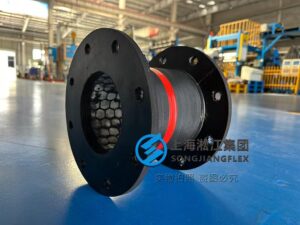
A WCR type DN200 rubber expansion joint combines high-elasticity rubber with spiral reinforcement layers. Acting as a flexible pipe connector, it absorbs axial and lateral movement while keeping a tight seal in marine pipelines.
Rigid steel pipes often struggle under constant movement. The spiral wound design spreads stress evenly, allowing controlled deformation. This makes it ideal for HVAC and water systems on ships, where vibration and dynamic loads are a constant concern.
What are the main advantages of DN200 WCR expansion joints for shipboard applications?
Ships need compact components that can handle high flow and mechanical stress simultaneously.
DN200 WCR expansion joints strike a balance between flow efficiency and strength. They also reduce vibration and resist corrosion, making them perfect for marine pipelines.
The DN200 size is standard for many shipboard systems. It simplifies installation while maintaining flexibility, supporting cooling water, ballast water, and HVAC pipelines. This makes it suitable for both new builds and retrofits.
How does a spiral wound rubber expansion joint improve vibration and noise reduction on vessels?
Vibration on ships causes noise, equipment fatigue, and reduces the lifespan of pipelines.
Spiral wound rubber expansion joints act as vibration dampers, isolating pipelines and connected equipment from mechanical oscillations.
In engine rooms and HVAC systems, the rubber absorbs energy while the spiral reinforcement stabilizes the joint. This reduces noise and protects pumps, compressors, and cooling units, improving comfort and system reliability on board.
What materials are used in WCR type DN200 expansion joints for marine environments?
Material choice is crucial for durability in saltwater and harsh offshore conditions.
WCR DN200 joints use seawater-resistant rubber compounds reinforced with fabric and spiral steel for strength and corrosion resistance.
EPDM and natural rubber blends are common. These materials are flexible, resistant to chemicals, and perform well in HVAC and water systems exposed to saltwater and humidity. Reinforcement layers prevent deformation, ensuring long service life in demanding marine environments.
How resistant is the WCR DN200 joint to seawater, corrosion, and temperature fluctuations?
Marine conditions accelerate wear and corrosion.
These corrosion-resistant rubber expansion joints are designed to handle seawater, UV, and temperature swings without cracking or losing performance.
The combination of rubber and internal reinforcement maintains flexibility under pressure changes. This makes them reliable for offshore platforms, engine rooms, and cooling systems, reducing maintenance needs and downtime.
How do WCR spiral wound joints handle axial, lateral, and angular movements in marine piping systems?
Pipelines on ships shift due to vessel motion and temperature changes.
WCR spiral wound joints absorb axial, lateral, and angular movements, keeping the system aligned and protecting pipe integrity.
The spiral design allows controlled movement in three directions, preventing stress buildup at flanges. This flexibility is essential for marine pipelines to avoid leaks and maintain performance in dynamic environments.
Why is the DN200 size commonly chosen for marine pipelines and industrial applications?
Standardization simplifies installation and engineering.
DN200 offers a good balance of flow, pressure resistance, and flexibility, making it popular in marine systems.
It is widely used in cooling water, ballast pipelines, and HVAC systems. The size provides efficiency while remaining easy to install, suitable for both shipbuilding and industrial applications.
What are the typical installation and maintenance requirements for WCR expansion joints on ships?
Correct installation ensures the joint lasts as intended.
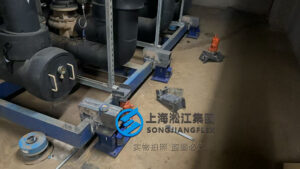
WCR expansion joints must be aligned properly, flange bolts torqued correctly, and regularly inspected to maintain performance.
During installation, avoid over-tightening to prevent rubber damage. Regular maintenance includes checking the rubber surface, bolts, and movement range. Inspections help catch early wear and keep vibration damping performance consistent.
Summary
WCR type DN200 spiral wound rubber expansion joints offer dependable vibration control, corrosion resistance, and flexibility, making them ideal for marine pipeline systems.