Why Choose a Stainless Steel PTFE-Lined Food-Grade Rubber Expansion Joint for Safe Food Processing Pipelines?
Food pipelines are exposed to corrosion, pressure fluctuation, and contamination risks. Standard expansion joints often fail under these conditions. PTFE-lined stainless steel rubber expansion joints provide a stable hygienic solution.
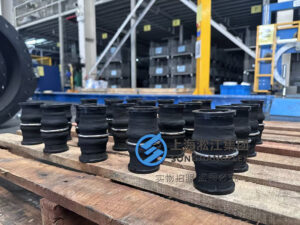
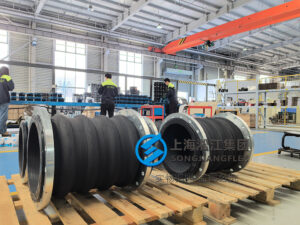
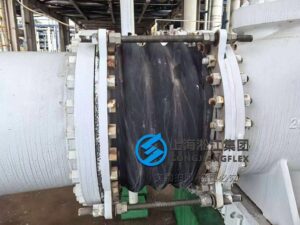
A stainless steel reinforced rubber expansion joint with PTFE lining is designed for food-grade pipeline systems. It resists chemical attack, high temperature steam, and mechanical stress. The structure helps maintain cleanliness and reduces leakage risk in dairy, beverage, and food processing lines where hygiene and stability are required.
The structure and performance of this type of expansion joint are explained in the following sections.
What is a stainless steel PTFE-lined food-grade rubber expansion joint and how does it work?
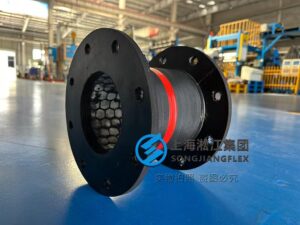
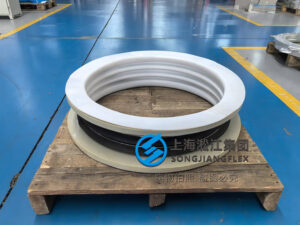
This type of expansion joint consists of an outer stainless steel reinforcement layer, an elastomer body, and an internal PTFE lining. Each layer serves a specific mechanical and chemical function in the pipeline system.
The rubber body absorbs vibration and compensates for axial, lateral, and angular movement. The stainless steel layer provides structural support under pressure. The PTFE lining acts as a barrier between the transported medium and the rubber material.
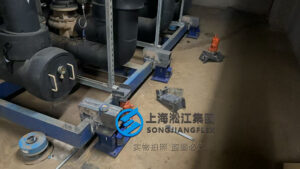
In operation, the joint isolates corrosive or high-temperature media from the elastomer, which helps maintain long-term dimensional stability. It is commonly installed in hygienic pipeline systems where fluid cleanliness and equipment stability must be controlled.
Why is PTFE (Teflon) lining used in food-grade rubber expansion joints?
PTFE is selected due to its chemical inertness and surface stability under temperature variation. It does not react with most acids, alkalis, oils, or cleaning agents used in food processing systems.
In pipeline applications, PTFE reduces material degradation caused by CIP (clean-in-place) chemicals and steam sterilization. Its low surface energy also limits residue adhesion, which helps maintain internal cleanliness.
For food processing lines such as juice, dairy, or sauce transport systems, PTFE lining reduces contamination risk caused by direct contact between process media and rubber components.
What are the advantages of stainless steel reinforced rubber expansion joints in food processing systems?
Stainless steel reinforcement improves the mechanical load capacity of rubber expansion joints. It prevents deformation under internal pressure and external vibration loads.
In food processing systems, pressure fluctuations and pump vibration are common. Reinforced structures help maintain alignment of connected pipelines and reduce stress concentration at flange joints.
Compared with non-reinforced types, stainless steel reinforced rubber joints provide longer service life and more stable performance in continuous operation environments.
Can PTFE-lined rubber expansion joints resist high temperature and chemical corrosion in food pipelines?
PTFE maintains stability across a wide temperature range and is commonly used in systems exposed to hot water, steam, and sterilization cycles.
In food pipelines, temperature changes occur frequently during cleaning and production cycles. The PTFE layer prevents chemical attack on the rubber body during these cycles.
The combination of PTFE and stainless steel reinforcement allows the joint to operate under both thermal expansion and chemical exposure conditions without significant performance degradation.
What industries commonly use food-grade rubber expansion joints with stainless steel lining?
These expansion joints are used in industries where hygiene and controlled fluid transport are required.
Typical applications include dairy processing, beverage production, brewing systems, and liquid food transportation pipelines. They are also used in pharmaceutical utility systems where sanitary conditions are required.
In these systems, the main requirement is maintaining flow stability while avoiding contamination from pipeline components.
How to choose the correct size and pressure rating for a PTFE-lined expansion joint?
Selection is based on pipeline diameter, working pressure, medium type, and temperature conditions.
The nominal diameter (DN) must match the connected piping system. The pressure rating (PN) should be selected according to system operating pressure, including possible transient surges.
Material compatibility between the PTFE lining and the transported medium must also be evaluated. In customized systems, reinforcement structure and thickness are adjusted according to operating conditions.
What is the difference between standard rubber expansion joints and PTFE-lined food-grade types?
Standard rubber expansion joints directly contact the medium through the elastomer layer. This limits their use in chemically aggressive or hygienic environments.
PTFE-lined food-grade types introduce an internal barrier layer that isolates the rubber from direct media contact. This improves chemical resistance and reduces contamination risk.
As a result, PTFE-lined versions are used in sanitary pipelines, while standard rubber types are generally used in non-critical industrial applications.
How to ensure hygiene and safety compliance in food and beverage pipelines?
Hygienic pipeline design requires materials that are resistant to microbial growth and chemical cleaning agents.
Expansion joints used in food systems must support smooth internal surfaces and avoid material shedding or degradation. PTFE-lined structures help meet these requirements.
Regular inspection, cleaning cycles, and proper installation alignment are necessary to maintain system hygiene over long-term operation.
Summary
PTFE-lined stainless steel rubber expansion joint provide chemical resistance, mechanical stability, and hygienic performance for food and beverage pipeline systems requiring controlled and safe fluid transport.