Can Rubber Expansion Joints Be Used in Electrolyzer Pure Water Systems?
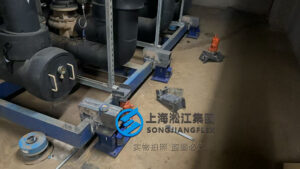
During the installation of industrial pipeline systems, flange misalignment is a very common challenge. This issue frequently occurs in large equipment installations or retrofit projects. If installers attempt to force the flange holes into alignment, it can increase installation difficulty and introduce additional stress into the pipeline system, which may lead to sealing failures or long-term damage.
In many electrolyzer pure water systems, this situation becomes even more noticeable due to limited installation space and on-site construction tolerances.
So the question arises: Can rubber expansion joints be used in electrolyzer pure water pipelines to solve installation problems?
The answer is yes. Rubber expansion joints are often an effective and practical solution.
What Is a Rubber Expansion Joint and Why Is It Suitable for Pure Water Pipelines?
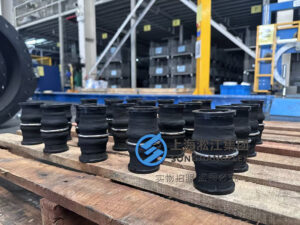
A rubber expansion joint is a flexible connector installed in pipeline systems. Its primary function is to absorb movement, vibration, and thermal expansion while also reducing noise and protecting connected equipment.
In pure water pipeline systems and electrolyzer supply water systems, rubber expansion joints are commonly used to:
-
Compensate for axial, lateral, and angular movement
-
Absorb vibration generated by pumps or equipment
-
Reduce noise transmission through pipelines
-
Protect flanges and equipment connections
Because rubber materials provide excellent elasticity and corrosion resistance, rubber expansion joints are widely used in water treatment systems, pure water pipelines, and electrolyzer equipment.
Real Project Case: Flange Misalignment in an Electrolyzer Pure Water Pipeline
In one electrolyzer pure water system project, the customer encountered a typical installation problem on site:
The flange bolt holes on both ends of the pipeline did not align properly.
This type of issue can be caused by several factors:
-
Pipeline installation tolerances
-
Equipment connection deviations
-
Pipe support installation errors
-
Small offsets in long pipeline runs
If installers force the flanges to align, it may lead to:
-
Uneven gasket pressure
-
Additional stress on the pipeline
-
Potential leakage risks during long-term operation
The customer therefore needed a more flexible and reliable installation solution.
Engineering Solution: One Fixed Flange and One Floating Flange
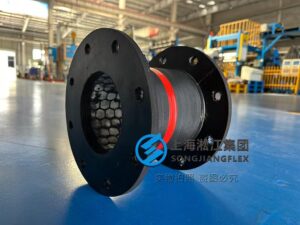
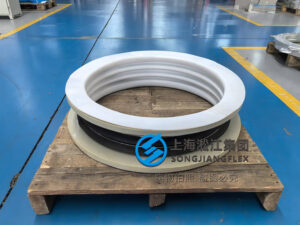
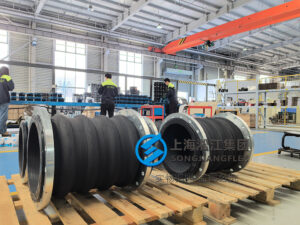
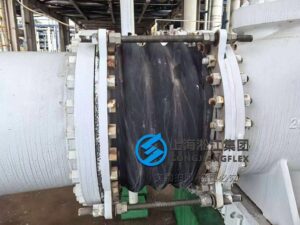
To solve this installation challenge, the engineering team designed a custom rubber expansion joint with one fixed flange and one floating flange.
The floating flange design allows installers to rotate or slightly adjust the flange during installation so that the bolt holes can easily align with the pipeline flange.
This structural design offers several advantages:
-
Greater installation flexibility
-
Ability to compensate for on-site alignment errors
-
Reduced mechanical stress during installation
-
Faster and easier pipeline assembly
During the customer’s installation process, this design significantly simplified the installation work and eliminated the need for additional pipeline modifications.
Key Advantages of Rubber Expansion Joints in Electrolyzer Water Systems
Using rubber expansion joints in electrolyzer pure water pipeline systems offers several important benefits beyond solving installation problems.
1. Improved Installation Flexibility
The floating flange design allows the expansion joint to accommodate minor installation deviations and flange misalignment.
2. Effective Vibration Absorption
Electrolyzer equipment and pumps generate vibration during operation. Rubber expansion joints help absorb these vibrations and protect the pipeline system.
3. Reduced Pipeline Stress
Flexible connections help reduce stress caused by thermal expansion, system movement, or installation misalignment.
4. Enhanced Sealing Reliability
By minimizing forced installation stress, rubber expansion joints help maintain stable sealing performance over time.
5. Wide Industrial Applications
In addition to electrolyzer systems, rubber expansion joints are widely used in:
-
Water treatment plants
-
Chemical processing pipelines
-
Power plant piping systems
-
HVAC systems
-
Industrial pump connections
Why Rubber Expansion Joints Are Widely Used in Modern Pipeline Systems
As industrial systems increasingly demand higher reliability, vibration control, and installation efficiency, rubber expansion joints have become an essential component in many pipeline systems.
Compared with rigid connections, rubber expansion joints provide:
-
Greater installation flexibility
-
Superior vibration isolation performance
-
Longer equipment service life
For industries such as water treatment, hydrogen production, electrolyzer systems, and industrial piping, rubber expansion joints offer a practical and reliable solution for both installation challenges and long-term system protection.