How to Solve Ultra-Large Lateral Movement Problems in Pulp Pipeline Systems?
Pulp pipeline systems often suffer from excessive lateral movement, causing stress, leakage, and unexpected downtime. A reliable expansion solution is essential.
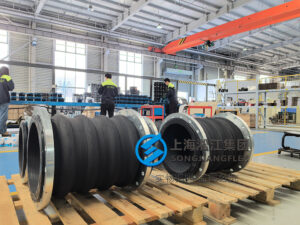
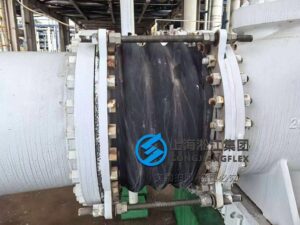
To solve ultra-large lateral movement problems in pulp pipeline systems, customized rubber expansion joints with wear-resistant materials, reinforced structures, and high flexibility are required. These solutions absorb large pipeline displacement, reduce stress, prevent leakage, and improve the reliability of industrial piping systems.
Understanding the causes and solutions helps engineers select the right expansion joint for demanding pulp applications.
Why Do Pulp Pipeline Systems Experience Ultra-Large Lateral Movement?
Pulp and paper industry pipelines operate under complex conditions where thermal expansion, vibration, and foundation changes continuously affect pipeline alignment and performance.
Pulp pipeline systems experience ultra-large lateral movement due to thermal expansion, equipment vibration, foundation settlement, and mechanical displacement. Without proper compensation, these movements can create excessive pipeline stress, damage connections, and reduce the service life of the entire piping system.
Pulp slurry pipelines are widely used in pulp mills to transport fiber suspensions and process materials. Compared with ordinary water pipelines, pulp slurry pipelines usually operate under more challenging conditions because the transported media may contain solid particles that increase abrasion and mechanical impact.
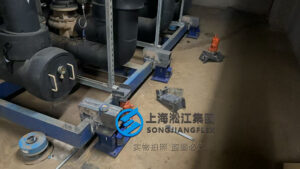
During operation, pipelines are affected by multiple factors, including temperature changes, pump vibration, equipment movement, and uneven foundation settlement. These factors can create complex pipeline displacement, especially large lateral movement.
If the pipeline system does not have enough flexibility, stress will accumulate around flanges, pumps, valves, and equipment connections. Over time, this may result in leakage, rubber component failure, and increased maintenance costs.
Therefore, selecting a suitable pulp pipeline expansion joint is critical for maintaining pipeline reliability and protecting connected equipment.
Why Are Standard Rubber Expansion Joints Not Suitable for Large Lateral Movement Applications?
Many industrial users discover that standard expansion joints cannot meet the movement requirements of complex pulp pipeline systems with extreme displacement conditions.
Standard rubber expansion joints are normally designed for conventional pipeline movement. However, large lateral movement applications require specially engineered structures with higher flexibility, stronger reinforcement, and improved fatigue resistance.
A standard rubber expansion joint can effectively handle common axial compression, extension, and small lateral movement. However, pulp pipeline systems often require much greater displacement capability due to long-distance installation and complicated operating environments.
When a standard product is forced to absorb excessive movement beyond its design capacity, several problems may occur:
- Increased pipeline stress
- Rubber fatigue and cracking
- Flange connection leakage
- Reduced service life
- Unexpected production interruptions
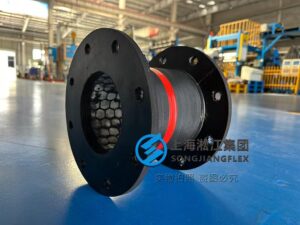
A large lateral movement expansion joint requires optimized rubber geometry and reinforced construction to provide additional flexibility while maintaining pressure resistance.
For demanding industrial applications, engineers should evaluate actual working conditions rather than simply selecting standard sizes. Factors such as movement range, pressure, temperature, and media characteristics must all be considered.
What Type of Rubber Expansion Joint Is Best for Pulp Slurry Pipelines?
Choosing the correct rubber material and structure is essential because pulp slurry pipelines face continuous abrasion, corrosion, and mechanical stress.
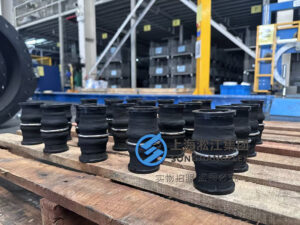
The best rubber expansion joint for pulp slurry pipelines should provide excellent abrasion resistance, corrosion resistance, flexibility, and durability. Natural rubber, EPDM, and customized rubber compounds are commonly selected according to the operating medium.
Pulp slurry is a challenging medium because it contains solid fibers and particles that can cause continuous wear on pipeline components. Therefore, a wear resistant rubber expansion joint is often required for pulp and paper applications.
Key performance requirements include:
1. Abrasion Resistance
The inner rubber layer must withstand continuous contact with pulp slurry. High-quality wear-resistant rubber compounds help reduce erosion and extend service life.
2. Corrosion Resistance
Depending on the chemical composition of the pulp process, the expansion joint material must resist chemical attack. Proper rubber selection improves long-term reliability.
3. Flexible Connection Design
A flexible rubber structure allows the joint to absorb pipeline displacement while reducing stress transferred to connected equipment.
4. Reinforced Structure
Multiple reinforcement layers improve pressure resistance and mechanical strength, making the expansion joint suitable for demanding industrial pipeline systems.
A properly selected rubber expansion joint can significantly improve pipeline performance and reduce maintenance requirements.
How Does a Large Lateral Movement Expansion Joint Reduce Pipeline Stress?
Pipeline stress is one of the major concerns in industrial piping systems, especially when large displacement occurs near equipment connections.
A large lateral movement expansion joint reduces pipeline stress by absorbing displacement, vibration, and movement between connected pipeline sections. This flexible design protects equipment connections and improves system reliability.
Rigid pipeline connections cannot easily absorb movement caused by thermal expansion, vibration, or settlement. As a result, stress is transferred directly to pumps, valves, and equipment nozzles.
A large lateral movement expansion joint works as a flexible connection between pipeline sections. It allows controlled movement while reducing mechanical loads on the entire system.
The benefits include:
- Lower pipeline stress concentration
- Reduced vibration transmission
- Protection of pumps and equipment
- Improved sealing performance
- Longer operating life
For pulp mills and industrial plants, reducing pipeline stress is essential because unexpected failures can lead to costly downtime and production losses.
Can Rubber Expansion Joints Prevent Pipeline Problems Caused by Foundation Settlement?
Foundation settlement is a common challenge in large industrial facilities and can create unexpected pipeline displacement over time.
Rubber expansion joints can compensate for pipeline movement caused by foundation settlement by providing flexibility and displacement absorption. They help reduce stress caused by uneven movement between connected pipeline sections.
Industrial facilities may experience foundation changes due to soil conditions, building aging, equipment loads, or environmental factors.
When pipeline supports move unevenly, rigid connections may experience excessive stress. This can cause:
- Pipe deformation
- Flange leakage
- Equipment nozzle damage
- Reduced pipeline reliability
A customized rubber expansion joint provides additional flexibility to accommodate these movements. Its elastic structure allows the pipeline system to adjust while maintaining a reliable sealing function.
For large pulp production facilities, anti-settlement capability is an important consideration when designing long-term pipeline solutions.
How Are Customized Expansion Joints Designed for Extreme Industrial Applications?
Different industrial projects have unique operating conditions, so customized expansion joint design is often required for reliable performance.
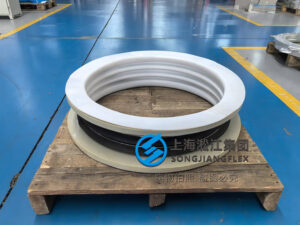
Customized expansion joints are designed according to pressure, temperature, media characteristics, movement requirements, and installation conditions. This approach ensures the product matches the actual needs of complex industrial pipeline systems.
A professional manufacturer evaluates multiple factors before designing a customized expansion joint, including:
- Working pressure
- Operating temperature
- Pipeline movement direction
- Lateral displacement requirements
- Chemical properties of the medium
- Flange standards
- Installation environment
For pulp pipeline applications, the rubber compound and reinforcement structure are especially important. The product must balance flexibility, strength, abrasion resistance, and corrosion resistance.
Advanced manufacturing capabilities allow engineers to optimize the expansion joint structure for special applications, including ultra-large lateral movement requirements.
Customized solutions provide better performance compared with standard products because they are designed around the actual working conditions of each project.
Why Should You Choose an Experienced Rubber Expansion Joint Manufacturer?
Selecting the right manufacturer is as important as selecting the right product because quality directly affects pipeline safety and service life.
An experienced rubber expansion joint manufacturer provides reliable quality control, customized engineering support, stable production capability, and professional technical assistance to help customers reduce project risks.
For industrial buyers, especially distributors and engineering companies, supplier reliability is a key purchasing factor.
Shanghai Songjiang Vibration Absorber Co., Ltd. has more than 30 years of experience in researching, developing, and manufacturing rubber expansion joints, vibration isolators, and rubber air springs.
The factory is equipped with automated production lines and professional testing equipment, including tensile testing machines, wear resistance testing equipment, hydrostatic testing machines, burst testing machines, and fatigue testing machines.
With experience serving industries such as petroleum, chemical, metallurgy, electric power, construction, thermal energy, and water supply, the company provides customized solutions for different industrial applications.
Professional manufacturing capability helps ensure:
- Stable product quality
- Reliable delivery
- Customized OEM solutions
- Long service life
- Technical support for complex applications
Summary
Ultra-large lateral movement in pulp pipelines requires customized, wear-resistant rubber expansion joints designed for reliable industrial performance.