Why Are Rubber Expansion Joints Essential for 6 MPa High-Pressure Water Pump Systems?
High-pressure water pumps often cause pipe vibrations and pressure surges, risking damage. Rubber expansion joints absorb shocks, reduce noise, and protect systems efficiently.
Rubber expansion joints are designed to handle up to 6 MPa pressure, providing vibration isolation, thermal expansion compensation, and pressure fluctuation absorption. They prevent pipe fatigue, leaks, and system downtime, ensuring long-term reliability in industrial water pump applications.
Let’s explore how rubber expansion joints solve high-pressure system challenges and enhance operational efficiency.
1. What Are the Main Challenges in 6 MPa High-Pressure Water Pump Systems?
High-pressure water pumps create strong pulsations, vibrations, and pressure spikes that can damage pipelines, valves, and connected equipment.
Without proper vibration and pressure compensation, water pump systems risk leaks, cracks, and premature equipment failure. Rubber expansion joints absorb these stresses, ensuring safer operation and reduced maintenance.
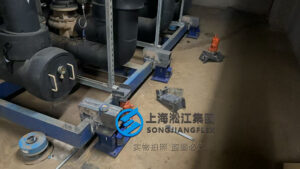
In 6 MPa industrial water pump systems, pipelines experience repeated stress from pressure fluctuations. Continuous vibration can loosen flange bolts, induce fatigue cracks, and compromise system stability. Rubber expansion joints act as flexible connectors, absorbing both axial and lateral movements. For DN40 or DN80 pipelines, properly installed joints extend service life and minimize costly repairs.
2. How Do Rubber Expansion Joints Absorb Vibration and Pressure Fluctuations?
Rubber materials combined with a multi-layer design allow expansion joints to flexibly respond to axial, lateral, and angular displacements under high pressure.
The elasticity of EPDM or neoprene rubber, combined with reinforced layers, absorbs vibration and dampens pressure surges. This ensures stable operation and reduces pipeline stress, even under continuous 6 MPa conditions.
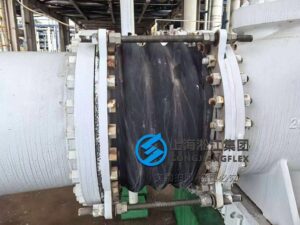
Rubber expansion joints function by converting kinetic energy from pulsating water into elastic deformation. The joint’s multi-layer reinforcement prevents overstretching while allowing controlled movement. Tie rods limit overextension and maintain alignment. This combination reduces noise, minimizes structural fatigue, and improves reliability. Selecting the right rubber compound ensures chemical and temperature resistance suitable for water pump systems.
3. What Are the Key Design Considerations for High-Pressure Applications?
High-pressure applications require careful attention to material selection, flange standards, tie rods, and bolt grades to ensure joint performance.
Choosing the correct rubber type, thickness, and reinforcement ensures resistance to 6 MPa pressure. ANSI-standard flanges, 8.8-grade bolts, and proper tie rods prevent failure and maintain system integrity.
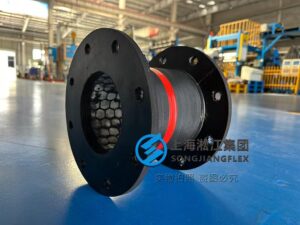
Designing a high-pressure rubber expansion joint involves selecting suitable elastomers like EPDM or nitrile, reinforced with cord layers or metal rings. Flange type (DN40, DN80) must match pipeline standards. Tie rods and high-grade bolts stabilize the joint under axial load. Proper design ensures minimal creep, leak-free operation, and compliance with industrial standards, making them reliable for water pump systems.
4. How to Maintain and Ensure Long-Term Reliability of Rubber Expansion Joints?
Regular inspection, cleaning, and monitoring of rubber joints are essential to prevent leaks, fatigue, and unexpected downtime in high-pressure systems.
Maintenance practices include visual checks for cracks, tightening flange bolts, and verifying tie rod integrity. Early detection of wear prevents catastrophic failures and prolongs joint lifespan.
Industrial operators should establish a scheduled maintenance routine. This includes checking for rubber degradation due to UV, chemical exposure, or extreme temperatures. Pressure testing, proper lubrication of bolts, and replacing worn-out joints before failure help avoid costly downtime. Reliable maintenance extends service life, ensuring water pumps operate safely under 6 MPa conditions.
5. Why Choose Customized Rubber Expansion Joints from a Trusted Manufacturer?
Customized joints from experienced manufacturers guarantee precise dimensions, high-quality materials, and optimized performance for demanding high-pressure water pump systems.
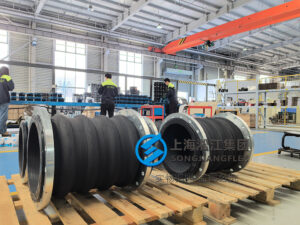
Factories like Songjiangflex provide automated production, stringent testing, and tailored solutions for 6 MPa pipelines, ensuring fast delivery, consistent quality, and compliance with international standards.
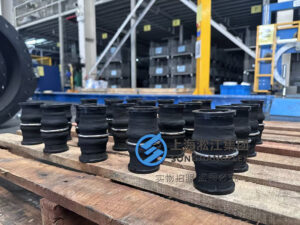
Songjiangflex leverages advanced automated production lines, including CNC cutting, forming, and vulcanizing equipment. Every joint undergoes hydrostatic, fatigue, and burst testing to ensure reliability. With export experience to Europe, North America, and the Middle East, the company provides DN40 and DN80 joints ready for installation. Customization allows clients to match pipeline requirements precisely, minimizing installation challenges and maximizing lifespan.
Rubber expansion joints protect high-pressure water pump systems by absorbing vibration, pressure surges, and thermal expansion, ensuring long-term reliability and reducing maintenance costs.
Learn more: https://rubberisolator.com/product/rubber-expansion-joint/hand-wrapped-rubber-expansion-joint/