Why Are High-Standard Rubber Expansion Joints Essential in Nuclear Projects?
Nuclear facilities demand extreme reliability. Standard expansion joints often fail under thermal stress, pressure fluctuations, and corrosion. Customized EPDM rubber expansion joints with reinforced 2205 stainless steel flanges and anti-pull limit devices provide safe, long-lasting solutions.
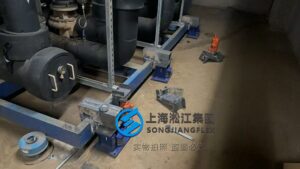
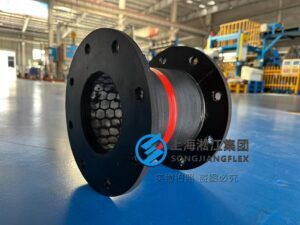
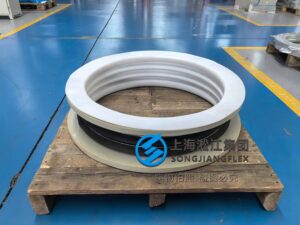
Tianwan Nuclear Power Plant selected customized EPDM rubber expansion joints with 2205 duplex stainless steel flanges and anti-pull limit devices for superior corrosion resistance, thermal stability, and operational safety. These joints ensure reliable long-term performance in demanding systems such as cooling water pipelines and high-pressure industrial applications.
Here’s a detailed look at why this design is critical for nuclear-grade and high-demand applications.
1. Why Are High-Standard Rubber Expansion Joints Essential in Nuclear Projects?
Nuclear power plants operate under strict safety regulations where even minor component failures can have severe consequences. High-standard expansion joints are essential to prevent operational disruptions.
High-standard rubber expansion joints absorb vibration, compensate for thermal expansion, and maintain sealing under extreme pressures, ensuring stability and compliance with nuclear safety standards.
In facilities like Tianwan, pipelines experience continuous stress from pressure surges, thermal cycling, and vibration. Ordinary joints may crack or leak, compromising system safety. High-quality expansion joints are engineered to handle dynamic loads, reduce vibration transmission, and protect connected equipment like pumps and valves, reducing maintenance needs and operational risks.
2. What Advantages Does Customized EPDM Rubber Offer in Nuclear Applications?
Material selection is crucial for expansion joint performance, particularly in harsh environments like nuclear power plants.
EPDM rubber offers excellent resistance to heat, water, aging, and radiation, ensuring long-term sealing and durability. Compared to NBR or SBR, EPDM performs reliably in nuclear cooling systems.
EPDM (Ethylene Propylene Diene Monomer) is widely used in water and steam pipelines for its stability and elasticity. In nuclear applications, it withstands circulating water systems and high-temperature cycles. Customized formulations further improve its fatigue resistance, ensuring joints maintain sealing integrity and elasticity over decades of operation.
3. Why Choose 2205 Duplex Stainless Steel Flanges Instead of Standard Stainless Steel?
Flange material determines the joint’s ability to resist corrosion and withstand high pressure, critical in nuclear-grade pipelines.
2205 duplex stainless steel flanges provide superior strength and excellent resistance to pitting and chloride-induced corrosion, ideal for cooling water systems and high-chloride environments.
Tianwan Nuclear Power Plant uses seawater cooling, exposing pipelines to high chloride content. Standard 304 or carbon steel flanges corrode quickly under these conditions. Duplex 2205 combines austenitic and ferritic structures, offering higher tensile strength, stress corrosion resistance, and longer service life, ensuring pipeline integrity and reducing maintenance costs.
4. How Do Anti-Pull and Anti-Explosion Limit Devices Improve Safety?
Mechanical safeguards prevent expansion joints from overextending or separating under pressure surges, critical in high-pressure nuclear systems.
Anti-pull and limit devices restrict excessive joint elongation and prevent accidental detachment, enhancing operational safety and system reliability.
Pressure spikes or sudden flow changes can stretch joints beyond limits, risking rupture. Anti-pull devices act as a safety mechanism, keeping movement within safe bounds. This protects adjacent equipment and ensures continuous operation. In nuclear applications, these devices are vital for compliance and risk mitigation.
5. What Are the Special Requirements of Tianwan’s Water Circulation System?
Nuclear cooling systems involve high flow rates, significant temperature differences, and continuous operation, demanding tailored expansion joint designs.
Expansion joints must resist corrosion, thermal cycling, and erosion from high-velocity water, while maintaining flexibility and leak-proof performance.
In the Tianwan system, pipelines face daily thermal expansion and contraction. High-quality EPDM joints with reinforced flanges and protective limits prevent wear, fatigue, and leaks. The design ensures stable water circulation, protects pumps and valves, and minimizes maintenance downtime, critical for uninterrupted nuclear operation.
6. How Does Songjiangflex Ensure Long-Term Reliability?
Consistent manufacturing and rigorous testing are key to supplying nuclear-grade components that meet international safety standards.
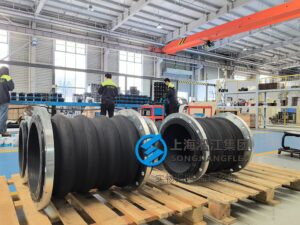
Songjiangflex combines automated production lines, advanced testing equipment, and extensive project experience to deliver reliable expansion joints suitable for nuclear applications.
Each joint undergoes pressure testing, burst testing, fatigue analysis, and material verification. Songjiangflex has supplied high-precision projects like the C919 aircraft and multiple nuclear facilities, demonstrating expertise and quality control. Automation ensures uniform production, while testing confirms each joint can withstand long-term operational stresses.
7. What Advantages Do These Joints Offer During Installation and Maintenance?
Ease of installation and low maintenance are crucial in nuclear facilities where downtime is costly.
These expansion joints allow quick installation, precise alignment, and reduced maintenance requirements. Limit devices prevent overextension, minimizing operational risks.
Pre-engineered dimensions and flange compatibility streamline installation. Anti-pull devices prevent accidental detachment during pipeline commissioning. Maintenance is simplified due to the durable EPDM material and corrosion-resistant flanges, reducing inspection frequency and operational disruption.
8. Which Industries Can Benefit from These High-Performance Expansion Joints?
Although designed for nuclear applications, these joints are versatile across various high-demand industries.
EPDM rubber expansion joints with 2205 flanges and limit devices are ideal for petrochemical plants, thermal power stations, water treatment, and other high-pressure, corrosive pipeline systems.
Industries such as oil & gas, chemical processing, and municipal water systems face similar challenges: corrosion, pressure fluctuations, and vibration. These joints absorb movement, reduce noise, and extend equipment life. Customizable designs ensure compatibility with diverse operational environments, making them a preferred solution for engineers and procurement managers globally.
Summary
Customized EPDM expansion joints with 2205 flanges and anti-pull devices provide unmatched safety, durability, and reliability for nuclear and industrial applications.