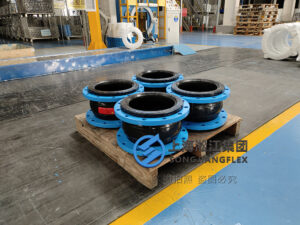
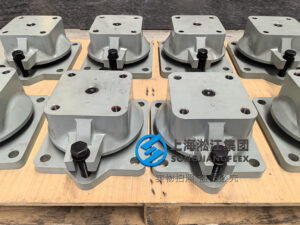
Why Is a Dual-Layer Vibration Isolation System Using Pipe Clamp Vibration Isolators and BE-Type Rubber Mounts More Effective?
Industrial machinery vibrations cause noise, structural fatigue, and operational instability. Single isolation methods often fail. Dual-layer vibration isolation systems offer a comprehensive, high-performance solution for lasting equipment protection.
A dual-layer vibration isolation system combines pipe clamp vibration isolators and BE-type rubber mounts to reduce vibration across multiple frequencies. It enhances equipment stability, lowers noise, and extends machinery lifespan, providing an ideal vibration damping solution for pumps, generators, and compressors.
Let’s explore how dual-layer systems work, their components, and their advantages in practical applications.
1. What is a dual-layer vibration isolation system?
A dual-layer vibration isolation system integrates two complementary types of isolators—pipe clamp isolators and BE-type rubber mounts—to address vibrations at different levels.
This system creates two isolation layers: one isolates pipe or conduit vibrations, while the other isolates the supporting equipment. It reduces both structural and airborne vibration effectively.
By separating pipe and equipment isolation, the dual-layer vibration isolation system handles both low- and high-frequency vibrations, ensuring equipment stability enhancement and delivering a high-performance vibration damping solution suitable for industrial pumps, generators, and compressors.
2. How do pipe clamp vibration isolators work to reduce vibration?
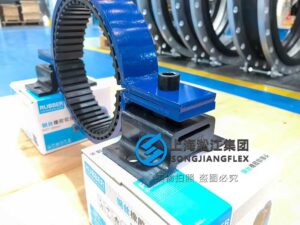
Pipe clamp vibration isolators attach directly to pipelines, absorbing vibrations from fluid flow or mechanical equipment before reaching the supporting structure.
They use elastic materials to decouple pipes from rigid mounts, reducing high-frequency vibration transmission.
In pipe clamp vibration isolators, the elastic layer converts vibration energy into harmless deformation, lowering stress on pipelines and connected machinery. This machinery vibration control method improves stability and reduces maintenance, making it essential in combined vibration isolation systems for pumps, generators, compressors.
3. What role do BE-type rubber mounts play in vibration damping?
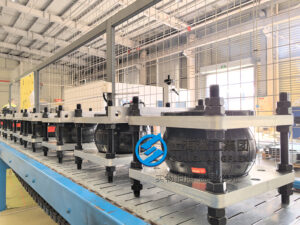
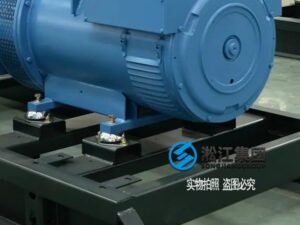
BE-type rubber mounts are installed at equipment bases to absorb low-frequency and large displacement vibrations that pipe clamps cannot handle.
They provide structural damping, isolating machinery from the foundation and enhancing overall stability.
The BE-type rubber mounts complement pipe clamp isolators by mitigating vibrations transmitted through supporting structures. They are key for noise and vibration reduction, equipment stability enhancement, and delivering high-performance vibration damping for industrial machinery, especially generators, compressors, and HVAC equipment.
4. Why is combining pipe clamp isolators and rubber mounts more effective than using a single type?
Using both types addresses vibration at multiple points along the transmission path, covering frequency ranges that single isolators cannot.
Dual-layer systems block high-frequency pipe vibrations and low-frequency structural vibrations simultaneously, providing more comprehensive damping.
Combining pipe clamp vibration isolators with BE-type rubber mounts creates an integrated vibration damping solution. This synergy reduces machinery fatigue, prevents bolt loosening, and ensures optimal performance of industrial vibration isolators, extending equipment lifespan and operational reliability.
5. What types of machinery benefit most from dual-layer vibration isolation?
Industrial equipment that generates complex vibrations or operates continuously benefits most from dual-layer systems.
Pumps, generators, compressors, and sensitive HVAC systems achieve reduced vibration, lower noise, and improved operational reliability.
High-performance dual-layer vibration isolation systems are widely adopted in industries requiring precise machinery vibration control. From water pumps and industrial fans to generator sets, this combination ensures noise and vibration reduction while supporting productivity and longevity.
6. How does a dual-layer system reduce noise in addition to vibration?
Vibration is a primary source of structural and airborne noise. By blocking multiple transmission paths, dual-layer systems also reduce noise.
Pipe clamps reduce high-frequency vibrations, and BE-type mounts damp low-frequency structural noise, achieving comprehensive acoustic control.
The dual-layer vibration isolation system functions as both a mechanical and acoustic barrier. It ensures high-performance vibration damping for industrial machinery and quieter industrial environments, improving worker comfort and operational safety.
7. What installation considerations affect the performance of pipe clamp isolators and BE-type mounts?
Correct installation is critical. Improper mounting or preload can reduce isolation efficiency.
Mounting position, torque, and alignment of both pipe clamps and BE-type mounts directly affect vibration reduction performance.
Proper installation ensures the combined vibration isolation system for pumps, generators, compressors performs optimally. Pipe clamps must match pipe diameter and load, while BE-type mounts require stable seating and correct preload to maintain equipment stability enhancement and long-term reliability.
8. Can a dual-layer system handle varying load and frequency conditions effectively?
Industrial machinery often operates under fluctuating loads and vibration frequencies, which single isolators cannot always accommodate.
Dual-layer systems allow each layer to respond to specific frequency ranges, providing consistent damping under variable conditions.
The flexibility of dual-layer vibration isolation systems ensures both high- and low-frequency vibrations are absorbed efficiently. This adaptability is essential for high-performance vibration damping for industrial machinery, maintaining equipment stability enhancement under varying operational stresses.
9. How does the dual-layer system prolong equipment lifespan?
Reducing vibration minimizes fatigue, mechanical wear, and bolt loosening, directly extending machinery service life.
By controlling vibrations at both the pipeline and structural levels, dual-layer systems reduce maintenance frequency.
Industrial equipment supported by pipe clamp vibration isolators and BE-type rubber mounts experiences less stress, lower noise, and fewer failures. This comprehensive vibration damping solution ensures machinery vibration control and operational longevity for pumps, generators, compressors, and other critical equipment.
10. What testing or standards are used to evaluate dual-layer vibration isolation performance?
Performance verification ensures industrial reliability and adherence to international vibration standards.
Testing typically includes vibration tables, frequency response analysis, and fatigue testing to assess isolation efficiency.
Industrial vibration isolators and dual-layer systems are evaluated per ISO and ASTM standards. Validated noise and vibration reduction confirms these systems meet safety, mechanical stability, and high-performance vibration damping for industrial machinery requirements.
Summary
Dual-layer systems combining pipe clamp isolators and BE-type mounts provide superior vibration and noise reduction, enhancing industrial equipment stability, reliability, and service life.