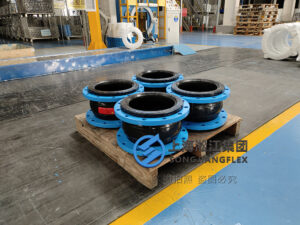
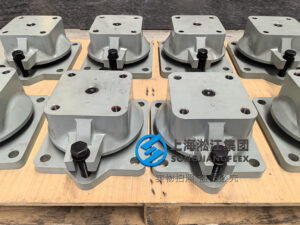
What Is a Stainless Steel Double Flange Limit Expansion Joint and Why Is It Essential for High-Pressure Piping Systems?
Thermal expansion, pressure surges, and installation tolerances often damage rigid stainless steel pipelines, causing leaks, flange failure, and costly downtime if axial movement is not properly controlled. A well-designed Stainless Steel Double Flange Limit Expansion Joint plays a critical role in preventing these issues.
A Stainless Steel Double Flange Limit Expansion Joint is designed to compensate controlled axial displacement while restraining excessive movement in piping systems. By combining expansion capability with limit rods, it protects flanges, pumps, and valves from pressure thrust and structural damage, making it essential for high-pressure industrial pipelines.
To understand its engineering value, it is important to examine how it works, how it is built, and where it is applied.
What Is a Stainless Steel Double Flange Limit Expansion Joint and How Does It Function in Piping Systems?
In stainless steel piping systems, uncontrolled movement caused by temperature changes or internal pressure can compromise structural integrity and connection reliability.
A Stainless Steel Double Flange Limit Expansion Joint allows limited axial expansion and contraction while preventing over-extension through mechanical restraints. This controlled movement ensures pipeline flexibility without sacrificing safety or alignment in demanding operating conditions.
Functionally, this type of stainless steel pipeline expansion joint absorbs thermal expansion and installation deviations while its limit rods restrict axial displacement within a predefined range. The double flange design ensures secure bolted connections, making it especially suitable for pipelines connected to pumps, heat exchangers, and pressure vessels where stability is critical.
How Does a Double Flange Limit Expansion Joint for Piping Systems Control Axial Movement and Prevent Over-Extension?
Axial movement control is one of the most critical requirements in high-pressure piping systems, especially during startup, shutdown, and pressure fluctuation phases.
A Double Flange Limit Expansion Joint for piping systems controls axial movement by combining flexible expansion capability with rigid limit rods that prevent excessive elongation or compression beyond design limits.
The limit rods absorb pressure thrust generated inside the pipeline and transfer it safely to adjacent structures. This prevents flange separation, bolt overstress, and pipeline instability. As a limit expansion joint for industrial piping, it significantly reduces the risk of sudden mechanical failure caused by thermal shock or pressure surges.
What Are the Key Structural Components of a Stainless Steel Expansion Joint with Limit Rods?
The performance and reliability of an expansion joint largely depend on its structural design and the quality of its core components.
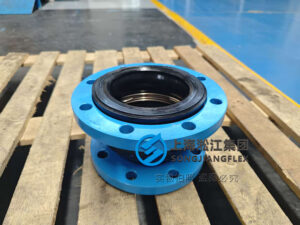
A stainless steel expansion joint with limit rods typically consists of a flexible expansion body, double flanges, and axial restraint rods that work together to manage movement and pressure safely.
The expansion body accommodates thermal displacement, while the double flanges provide strong, leak-resistant connections. The limit rods—often adjustable—define the maximum allowable movement, transforming the assembly into a double flange restrained expansion joint suitable for demanding industrial and municipal pipeline systems.
Why Is a Double Flange Restrained Expansion Joint Critical for High-Pressure Stainless Steel Pipeline Systems?
High-pressure stainless steel pipelines generate significant axial thrust that can overload anchors, flanges, and connected equipment if not properly restrained.
A double flange restrained expansion joint is critical because it absorbs internal pressure thrust while maintaining controlled flexibility, ensuring pipeline safety under high-pressure operating conditions.
In applications such as expansion joint for power plant piping, restrained expansion joints prevent catastrophic failures by transferring axial loads to designated structural supports. This makes them indispensable in energy, petrochemical, and industrial utility systems where safety margins are non-negotiable.
In Which Industries Is a Stainless Steel Pipeline Expansion Joint Most Commonly Applied?
Because of their durability and pressure-handling capability, stainless steel expansion joints are widely used across multiple infrastructure and industrial sectors.
A stainless steel pipeline expansion joint is commonly applied in water supply, HVAC, chemical processing, and power generation industries where reliability and corrosion resistance are required.
Typical applications include expansion joint for water supply pipelines, expansion joint for HVAC piping systems, expansion joint for chemical pipelines, and expansion joint for power plant piping. These systems demand long service life, pressure stability, and consistent performance under variable operating conditions.
How Does a Limit Expansion Joint for Industrial Piping Improve Pipeline Safety and Operational Stability?
Pipeline safety is not only about pressure rating but also about maintaining long-term operational stability under repeated thermal and mechanical stress.
A limit expansion joint for industrial piping improves safety by controlling displacement, absorbing thrust, and protecting connected equipment from excessive mechanical loads.
By stabilizing axial movement and reducing stress on anchors and flanges, a Stainless Steel Limit Expansion Joint minimizes maintenance frequency and unplanned downtime. This contributes to smoother system operation, especially in continuous-duty industrial environments.
What Is the Difference Between a Stainless Steel Double Flange Limit Expansion Joint and a Non-Restrained Expansion Joint?
Selecting the wrong type of expansion joint can lead to unexpected failures, particularly in pressure-intensive stainless steel pipeline systems.
Unlike non-restrained designs, a Stainless Steel Double Flange Limit Expansion Joint includes mechanical restraints that control axial thrust and prevent over-extension.
Non-restrained expansion joints rely heavily on external anchors to absorb pressure forces, increasing system complexity. In contrast, restrained designs integrate safety directly into the joint itself, offering superior reliability for high-pressure and critical-service applications.
Why Should Engineers Choose a Double Flange Limit Expansion Joint Instead of Rubber Expansion Joints for High-Temperature Pipelines?
While rubber expansion joints are effective for vibration isolation, they are not always suitable for high-temperature or high-pressure stainless steel pipelines.
Engineers should choose a Double Flange Limit Expansion Joint for high-temperature pipelines due to its superior thermal resistance, pressure capacity, and structural strength.
Rubber joints are limited by temperature, aging, and pressure ratings. Stainless steel restrained expansion joints maintain performance in elevated-temperature environments and harsh industrial conditions, making them the preferred choice for power plants, chemical processing, and heavy industrial piping systems.
Summary
A Double Flange Limit Expansion Joint ensures controlled flexibility, pressure safety, and long-term reliability, making it essential for high-pressure and high-temperature industrial piping systems.