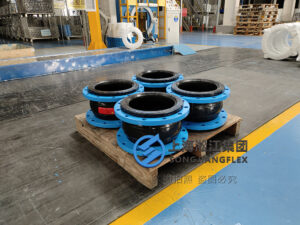
Can Rubber Expansion Joints Really Work Normally in Extreme Cold?
Harsh cold can cause pipe failures and leaks. Ordinary materials often fail, but specially tested rubber expansion joints maintain performance even at -60°C.
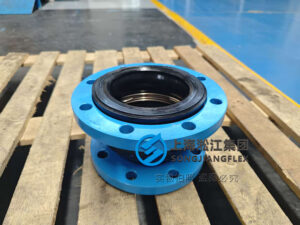
Rubber expansion joints were tested in a -60°C cold chamber for 24 hours, followed by pressure and displacement evaluations. Results show stable sealing, reliable flexibility, and structural integrity, making them ideal for cold-region piping projects.
Let’s explore the detailed testing methods and performance results in extreme cold.
Material Properties of Rubber Expansion Joints in Low Temperatures
The performance of rubber expansion joints in freezing conditions relies on the material’s ability to remain elastic and maintain a reliable seal.
Specially formulated rubber maintains flexibility at -60°C, ensuring leak prevention and consistent performance in pipelines.
Materials such as EPDM, Hypalon, or specialized cold-resistant rubber are chemically stable at extremely low temperatures. Their molecular structure prevents brittleness, allowing the expansion joint to absorb thermal contraction and pipeline movements without cracking. This makes them suitable for pipelines in Arctic regions, Siberia, or high-altitude cold environments.
Low-Temperature Performance Testing Methods
Testing ensures the expansion joint meets rigorous standards under extreme cold.
Joints were placed in a -60°C chamber for 24 hours, then evaluated under pressure and displacement conditions, confirming performance reliability.
The testing process includes: pre-conditioning in a low-temperature chamber, applying operational pressures, measuring axial and lateral displacement, and inspecting sealing surfaces. These tests mimic real-world pipeline conditions in cold climates and validate that the joints can withstand thermal contraction, pressure fluctuations, and mechanical movements.
Sealing Performance in Extreme Cold
Sealing performance is critical to prevent leaks and maintain pipeline safety.
Test results confirm that rubber expansion joints retain airtight sealing at -60°C, ensuring safe operation in cold regions.
Even after prolonged exposure to extreme cold, the joints maintain their compressive and tensile properties. Engineers in cold-region projects report minimal maintenance requirements and reduced risk of pipeline failures, highlighting the material’s reliability and suitability for water supply, chemical, and petroleum pipelines in harsh climates.
Flexibility and Structural Integrity Analysis
Flexibility and structural integrity are essential to withstand pipeline movement at low temperatures.
After -60°C testing, the expansion joint remains structurally intact and continues to accommodate pipeline displacement.
The joint’s design allows it to absorb axial, lateral, and angular movements without cracking. Reinforced layers and precise vulcanization ensure the rubber can endure repeated contractions and expansions caused by cold weather, while maintaining the internal pressure containment required for safe pipeline operation.
Advantages for Cold-Region Piping Projects
High-performance rubber expansion joints offer multiple advantages in extremely cold environments.
They ensure pipeline safety, reduce maintenance costs, and extend service life, making them highly suitable for cold-region engineering projects.
Cold-region projects, such as northern China, Siberia, or the Middle Eastern highlands, benefit from joints that resist thermal stress. Their reliable sealing and flexibility reduce downtime and prevent leaks, ultimately improving operational efficiency and lowering long-term maintenance costs. These joints are a cost-effective solution for harsh environmental conditions.
Rubber expansion joints remain sealed, flexible, and structurally sound at -60°C, ideal for pipelines in extreme cold environments.